The key research questions of the lab:
How do we engineer wearable sensor systems for the real world?
What new ML/AI models should we build to understand body signals?
Where are the untapped clinical opportunities to understand physiology?
The Problem
Valuable health information is being lost in the gaps of our current system.
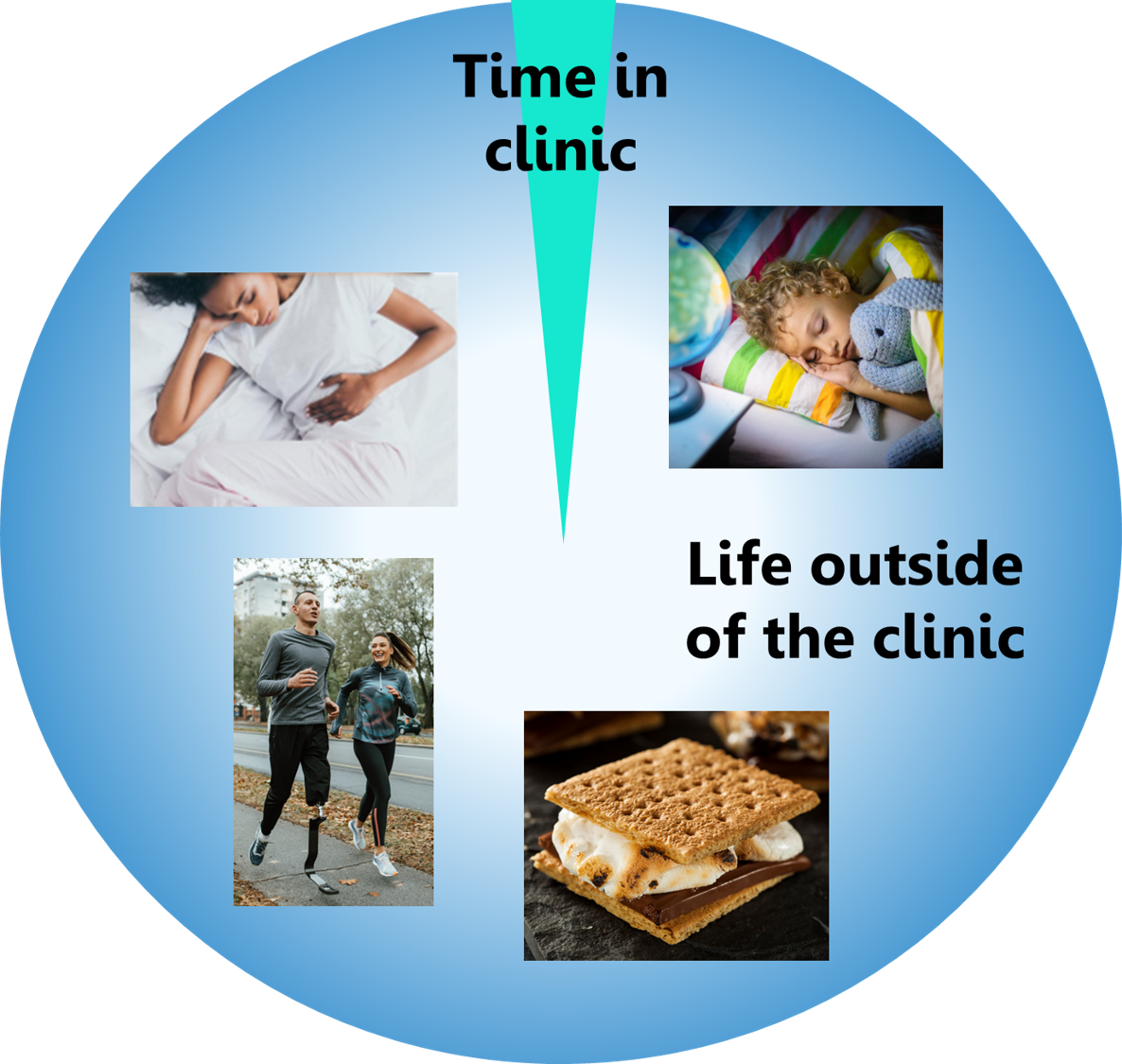
The vast majority of patients spend a relatively small fraction of their total time in a clinic. Life happens elsewhere—in diet, sleep, and daily stress. Currently, this remains largely out of the purview of healthcare.
What about...
- Everything experienced outside the clinic?
- Situations where patients cannot speak for themselves?
- Functions outside of our conscious awareness and control?
The Autonomic Nervous System
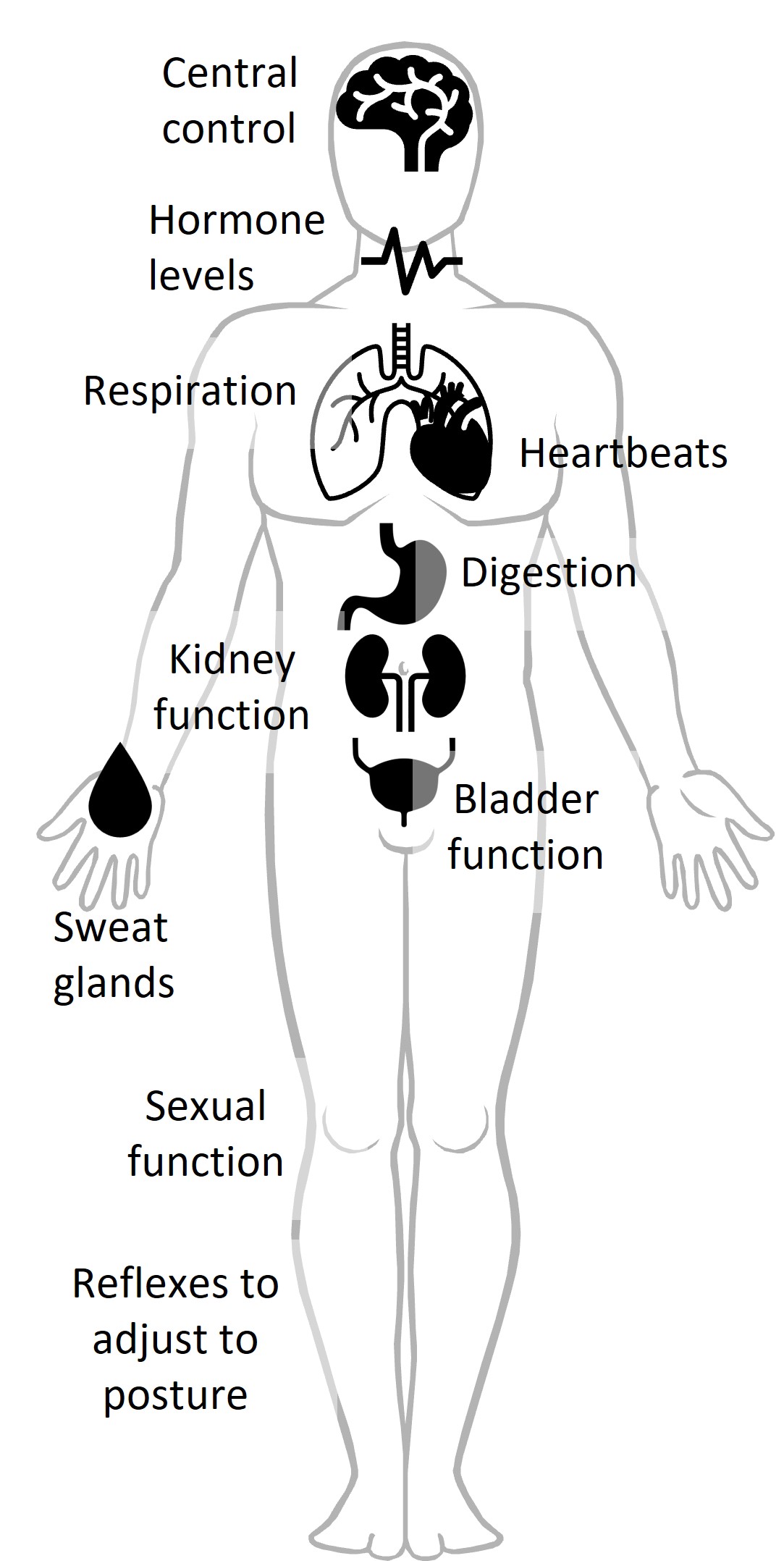
The ANS controls all of our unconscious functions (heartbeats, digestion, sweating, etc.). Advances in wearable sensing now allow us to track these signals in ways we never could before.
By monitoring the ANS, we can capture body function:
- Outside of the clinic during daily life
- Even when patients are unconscious or incapacitated
- Beyond a patient's conscious control
Our Interdisciplinary Approach
A synergistic cycle of prototyping, modeling, and algorithm development.
1. Clinically Immersive Data Collection & Prototyping
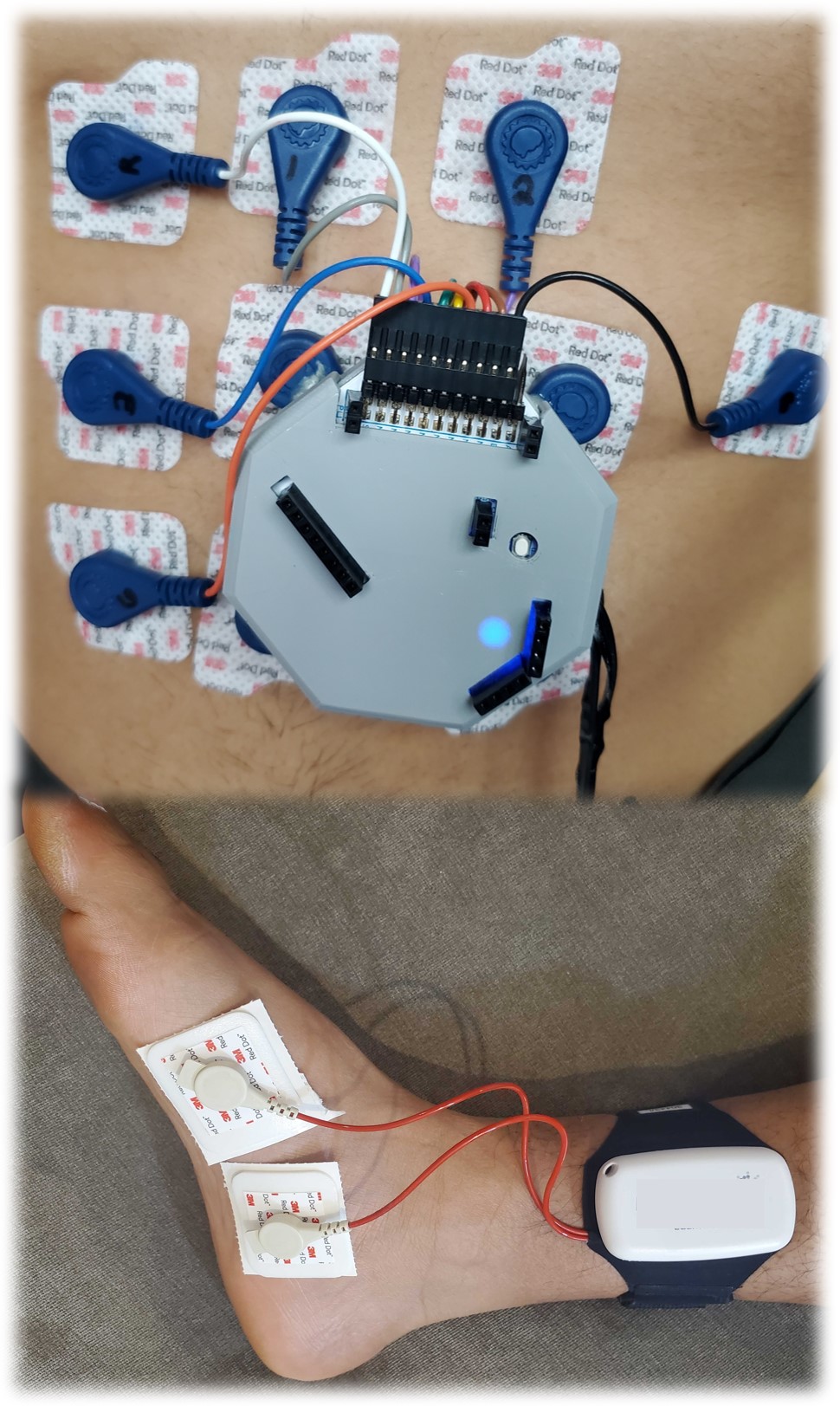
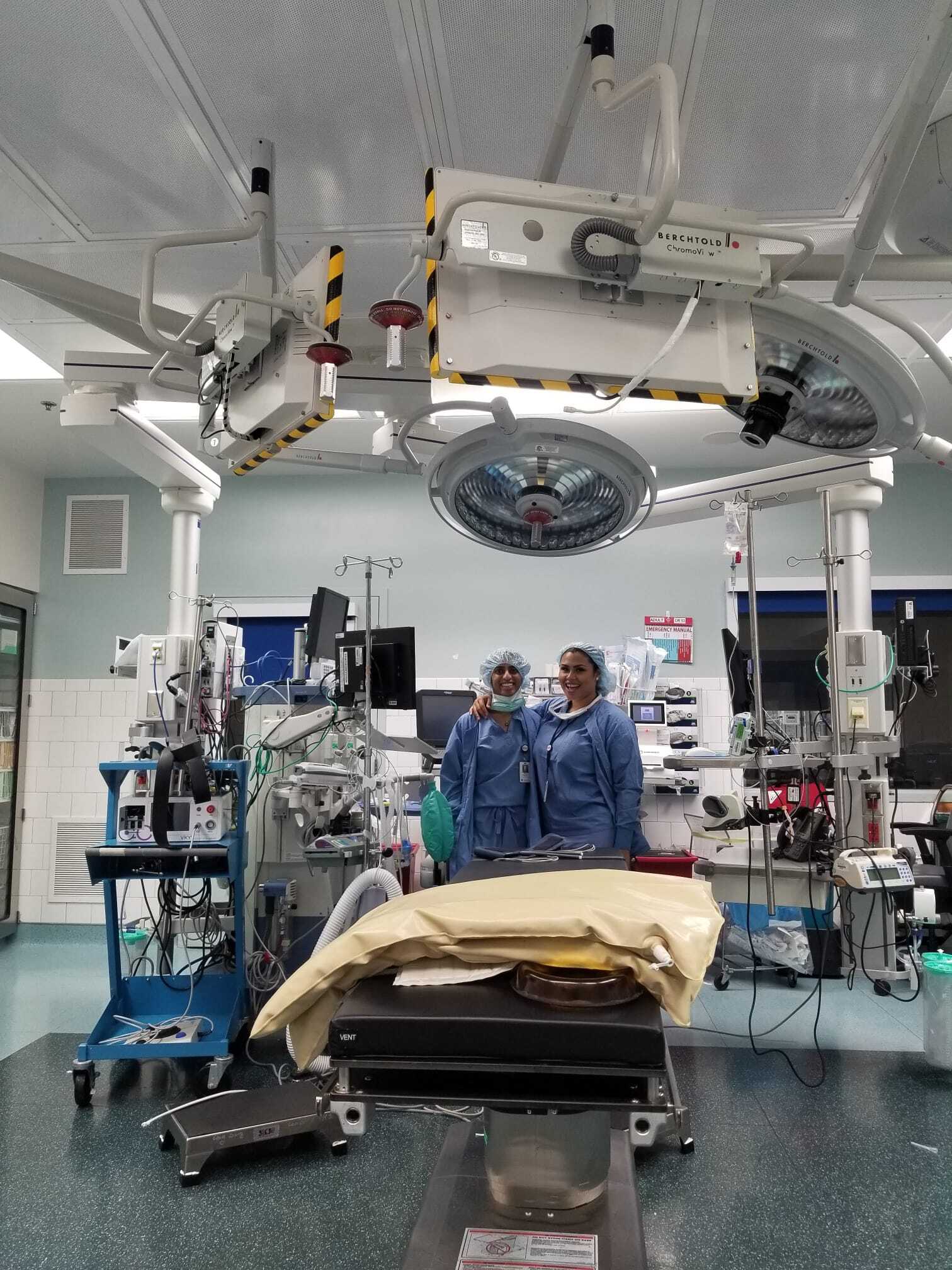
We collect our own data by running human studies with healthy volunteers and patient populations, both in clinical settings and at home. Our goal is to balance high-quality clinical data with the real-world usability constraints of busy clinics, clinicians, and patients.
- Developing new target wearables to track bladder muscle activity at home for Multiple Sclerosis (MS) monitoring.
- Engineering V2 of our full at-home, multi-sensor autonomic platform for high energy efficiency and ease of use.
- Modulation of autonomic activity in tightly controlled environments with healthy volunteers.
- Multi-sensor baseline tracking for patients undergoing major surgery under general anesthesia.
- Continuous 24-72 hour multi-sensor autonomic mapping at home for chronic migraine cohorts.
2. Algorithm Development
Real-world physiological data is messy: highly noisy, full of physical movement artifacts, and typically unlabeled. We develop robust neural architectures and unsupervised, differentiable biosignal algorithms that can automatically map out patterns without stripping away basic physiological integrity.
Developing dynamic multi-organ network models tracking autonomic regulation across the body simultaneously.
Core Algorithmic Frameworks & Papers
- Sweat Gland Biophysics: Ground-up physiological quantization ( IEEE TBME 2021, PLoS Comp Bio 2021, PNAS 2020, Proc IEEE EMBC 2019)
- Artifact Mitigation: Automated real-time EDA correction arrays inside clinical ORs ( Phys Meas 2022, Proc IEEE EMBC 2021)
- State Classification: Parsing clean sleep vs. wake metrics from raw accelerometer dynamics ( Proc IEEE EMBC 2022)
- Heartbeat Dynamics: Neural temporal point process mapping frameworks ( ICLR TS4H 2024)
Physiology-Informed AI
Incorporating physiological priors, principles, and knowledge into differentiable models
3. Physiologic Modeling
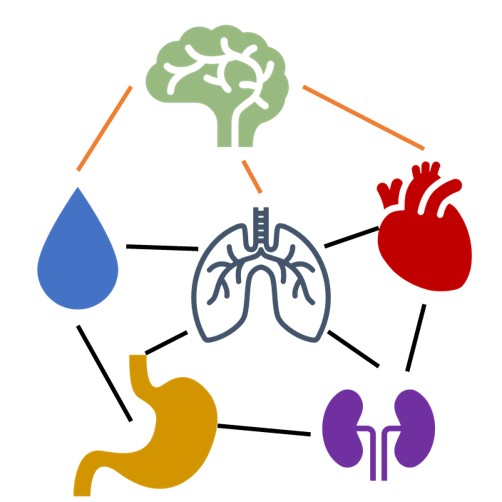
Computational models scale beautifully when they understand structural limits. We build physiologically and statistically rigorous models by embedding macroscale organ priors as mathematical inductive biases, achieving high validation stability even on sparse data fields.
- Deep multi-system ANS profiling across complex syndromic cohorts, including Long COVID and Chronic Fatigue Syndrome (CFS).
- Prototyping and piloting validation infrastructure for the distributed "At-Home Autonomic Clinic of Tomorrow."
Clinical Translation References
- General anesthesia: Mapping deep autonomic responses directly to depth states ( PLoS ONE 2021, Proc IEEE EMBC 2022)
- Digestive disorders: Tracking ambulatory variance across specific functional subtypes ( IEEE TBME 2023)
- Pain stratification: Sorting chronic clinical pain markers via EEG data clustering models ( Proc IEEE EMBS)
- Unconscious pain during surgery: Mapping multi-hour unconscious surgical pain trajectories ( PNAS 2024)